Content note: This article discusses Complex Post-Traumatic Stress Disorder (CPTSD), childhood abuse, emotional flashbacks, dissociation, and suicidal ideation.
Please read at your own pace, take breaks if needed, and always prioritise your safety and well-being. This text is written from lived experience and is not a substitute for therapy or medical advice. If you are in crisis, please reach out to a trusted person or a mental health professional, or find a free, confidential helpline in your country at findahelpline.com.
Does solo travel reduce stress? What is CPTSD?
Last reviewed: October 2026. Facts and sources checked against the original studies.
First things first: this article may contain triggers.
Please take care of yourself while reading.
Second, I’m not a doctor. I am, however, someone who has lived with the sequels of CPTSD for over 20 years in my own skin. And still, I can honestly tell you that travelling alone with CPTSD can be an absolute delight, my sweet corn creamy soup with croutons.
That said, I won’t romanticise it. Not even a little.
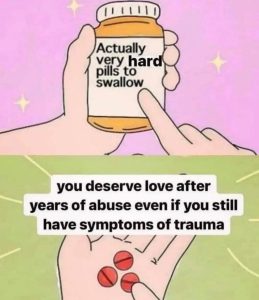
On top of growing up in the hood, I am a child abuse survivor. And if you had similar experiences, I see you. I value you. You are meant to be loved, respected, and the rightful owner of your body and your life.
Although this article offers some practical tools for dealing with CPTSD, it is not, in any shape or form, a replacement for therapy. However, many therapists believe that patients who study and understand their condition tend to recover faster.
This article is based mainly on “Complex PTSD: From Surviving to Thriving” by Pete Walker, a trauma therapist and author who doesn’t know I exist, but who completely changed my life. It’s a heavy book, tough.
You will laugh, but you also may need to pause, skip chapters, or cry a little (or an ocean). Still, I promise you: it’s 100% worth it.
What is CPTSD?
Complex post-traumatic stress disorder (CPTSD) develops after prolonged or repeated trauma, often in childhood, when escape feels impossible. The World Health Organisation recognised it as a diagnosis in its ICD-11 classification (in use since 2022): it includes the core symptoms of PTSD, plus ongoing difficulties with managing emotions, a deep sense of worthlessness, and trouble in relationships. The US diagnostic manual, the DSM-5, doesn’t list it separately yet.
Beyond the official definition, trauma therapist Pete Walker describes a set of features that many survivors will recognise, and knowing yours matters, because no two people carry CPTSD the same way. Some of the most common include:
- Emotional flashbacks, which are sudden and prolonged regressions to the overwhelming feelings of fear, shame or abandonment from your childhood, without visual flashbacks. It’s like a déjà vu, minus the images you generally encounter in PTSD survivors.
You feel everything again because, as a child, you never learned to regulate those emotions. Because obviously, you were just a child. - Toxic shame is that intrusive, persistent feeling that you’re ugly, stupid, or doomed to fail. You know?
That one that hijacks your self-esteem and drags you straight back to childhood insults and neglect. I know, too. It super sucks. - Tyrannical Inner/Outer critics are often born from a lack of boundaries and reinforcement in the early stages of your life.
Many survivors develop perfectionism as a survival strategy. It is like: “If I’m perfect, then I’ll be accepted.” When perfection fails (and you can be sure it always does), harsh criticism takes over, both in yourself and in others. - Self-abandonment is sometimes also present as part of the package. There are few to no studies measuring toxicity within the familiar institution. Still, it is a fact that when children grow up in toxic environments, they often internalise blame and learn to ignore their own needs. In adulthood, this can translate into neglecting one’s own well-being and struggling with self-love.
- Social anxiety and agoraphobia can occur after years of humiliation or bullying by caregivers, which can make social interaction feel dangerous or scary.
When you least expect it, fear of people, connection, and exposure becomes the norm. - Feelings of loneliness or abandonment can also occur when a kid grows up with a disturbed sense of what a healthy, real, and unconditional bond is.
- Attachment difficulties can result from a lack of safe emotional bonds early in life, which can lead to deep struggles with trust, intimacy, and vulnerability in adulthood.
- Developmental arrest. Trauma can totally freeze emotional development. Survivors may struggle with emotional regulation, relationships, and even intellectual growth.
Not because we lack intelligence, but because surviving becomes a priority. - Radical mood swings also happen when trauma dysregulates the nervous system. Fight, flight, freeze, and fawn responses get tangled, leading to sudden emotional shifts and reactions that people may regret later.
- Dissociation. Your amygdala learned early that “escaping mentally” was safer than staying present.
So now you sometimes travel to Narnia mid-conversation and come back with no idea what just happened.
- Suicidal ideation occurs in severe cases. CPTSD survivors may fantasise about accidents, illnesses, or death, or even start to plan it. If this resonates with you, please talk to someone you trust or find a helpline near you at findahelpline.com. There is a way out.
What is it like to have
Complex Post-Traumatic Stress Disorder (CPTSD)?
It’s amazing; I highly recommend it! ⭐️⭐️⭐️⭐️⭐️
Jokes apart, living with CPTSD is freaking hard. And if you don’t reflect on it, it can quietly steal your life, mate.
The good news?
Trauma is not a life sentence, nor are you forever doomed. According to Pete Walker, trauma is a learned response, and happily, learned responses can be unlearned. Slowly, imperfectly, and with compassion.
Not everyone can trust therapy. Many CPTSD survivors struggle to open up to professionals, especially after being retraumatised by poorly trained ones.
In my case, I saw around 100 professionals before finding one therapist who didn’t just poke my wounds but gave me practical tools to deal with the process. A Black immigrant therapist in England, whom I’ll be forever grateful to.
Ironically, Pete Walker’s own healing journey began with a deeply frustrating trip to Calcutta that did not bring the enlightenment he expected.
So no, travelling won’t magically heal you.
But it can support healing if you understand what you’re carrying inside this heart-shaped box.
Can people with CPTSD travel alone?
Well, I’m a 37-year-old woman who travels alone internationally — and I absolutely love it!
Do I need breaks? Yes.
Do I sometimes need silence, grounding, or an extra portion of self-care?
Yes, sir!
But I refuse to let my trauma take away the life I’m building.
Travelling with CPTSD means no chance of minimising it or ignoring it. Below are some tools adapted from Pete Walker’s work that can help manage emotional flashbacks, especially while you’re travelling alone.
Tools to manage CPTSD flashbacks
(especially while travelling alone)
- Do not deny it.
Name the damn flashback. You’re being pulled into old feelings, not imminent danger. Remember that you’re an adult now, with skills and resources you didn’t have back then to defend yourself. - Remind yourself that you’re afraid, but you’re not in danger.
Speak to yourself as you would to a child in danger: gently and protectively.
Wouldn’t you show extra kindness to a kid living in a situation similar to yours?
So be extra kind to your inner child, and listen to what your little one has to say, for the goddess’s sake. - Own your right/need to have boundaries.
Your triggers are real, but you have to learn to deal with them and set boundaries so you can reduce drama and increase your freedom.
I know it can be scary sometimes, but once you start bossing it, you’ll feel so free and proud of yourself that you won’t ever go back to old habits! - Speak reassuringly to your inner child.
Become the adult you needed in the past. Adventure and safety can coexist; did you know it? - Deconstruct eternity thinking.
Flashbacks feel endless, but they pass. You know they always do. - Ease back into your body.
Breathe. Ground yourself. Feel your chest, your belly, and calmly repeat with me: “This sh*t is absolute sh*t, but it will pass!” - Resist the Inner/Outer critics.
Ask: Am I in danger, or is this perception?
Stop trying to control the uncontrollable and refuse to hate, shame or abandon yourself, as it is time to give you some sweet love, babe.
Be angry at your self-criticism and tell it to shut the f*ck up, if necessary.
Facts > fear. - Allow yourself to grieve.
Flashbacks are unprocessed pain asking for care.
Turn your tears into compassion and your anger into protection, my dumpling. Feel it and let it go. - Cultivate safe relationships and seek support.
Don’t isolate yourself.
Educate people you trust, so that they can help you during your flashbacks. And do not be afraid or ashamed of asking for help; these people love you and root for you. - Identify your triggers.
Pay attention to people, places and situations; you know the energy. Sometimes you won’t be able to avoid all of them, as you don’t live in a bubble, but awareness helps a lot.
If you can’t avoid it and the flashback starts, focus on the preventive methods listed here. - Ask yourself what you are flashing back to.
Your body is trying to heal something old that you’ve been carrying on your shoulders for a long time. Listen to it, creature! - Be patient with a slow and nonlinear recovery process.
It takes time to re-educate your natural responses and reduce the duration, intensity, and frequency of your flashbacks.
Healing is messy, slow and unromantic, but it is real and achievable, too. You are not broken, little one. You are now becoming.
Travelling alone with CPTSD takes courage. Living with CPTSD actually takes bravery. You are not weak, mate. You are a freaking warrior!
Now go offline. Live.
And if you carry this article with a little more self-compassion than before, I promise you’ll make me very happy.
I’m sending you a truckload of love, acceptance, and bright intentions.
You deserve to shine. 💛