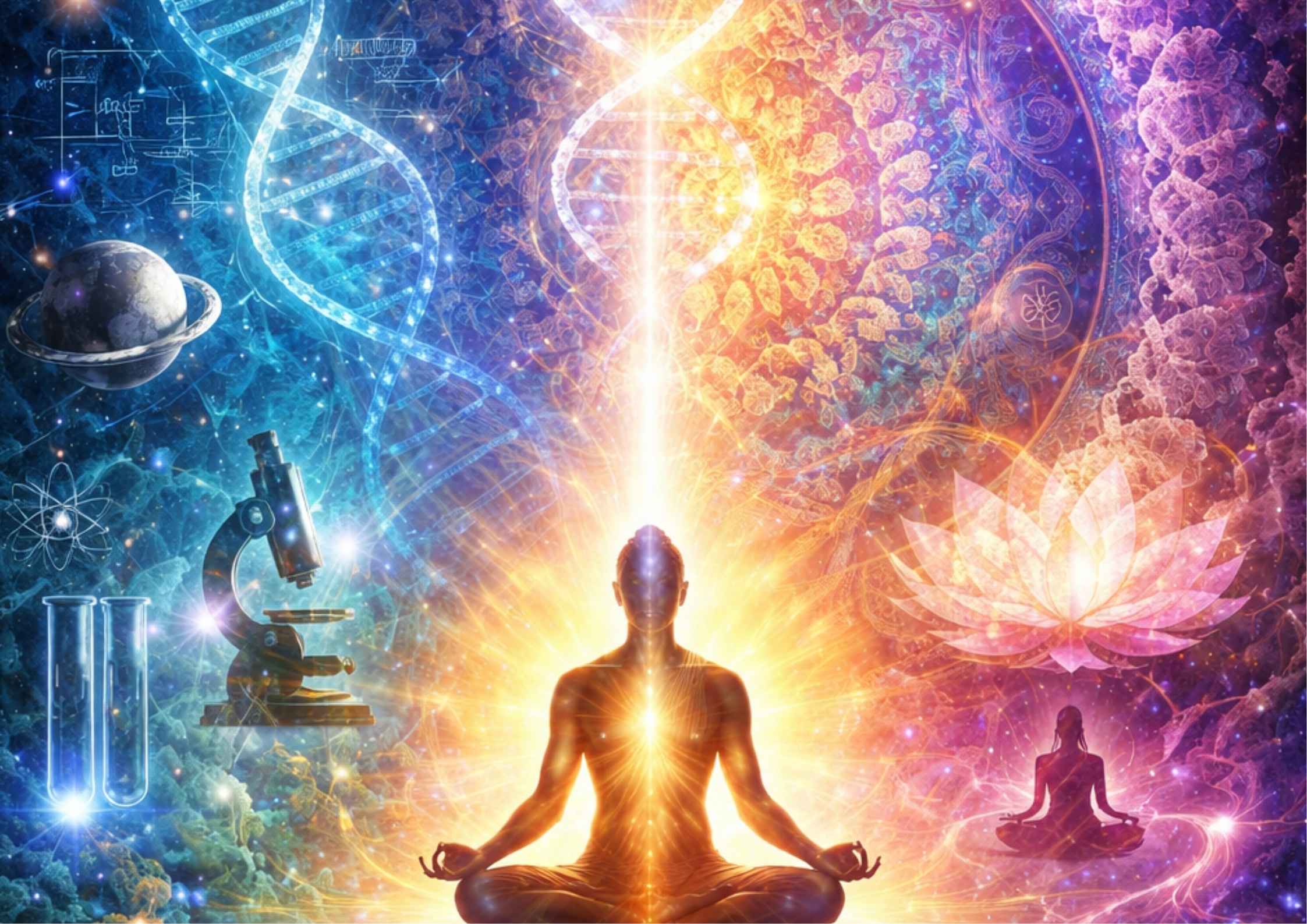

With rising distress in post-industrial culture;
science has been exploring spirituality
Last reviewed: October 2026. Facts and sources checked against the original studies.
Attribution note:
All data and claims referenced in this article are drawn from Dr Miller’s video on neuroscience, spirituality, and mental health. This piece presents a neuroscience frame with a cautious interpretation of the evidence.
There has never been a time in post-industrial global culture when scientists have observed suffering at the scale we are experiencing today.
Rates of addiction, depression, and death by suicide continue to rise at alarming levels.
And, surprisingly, science is beginning to point to a clear, often overlooked solution: spirituality.
This article is inspired by a lecture by Professor Lisa Miller at the Oxford Interfaith Forum, in which she explores the intersection of neuroscience, mental health, and spiritual life.
If you haven’t read Part 1 yet, you can start here.

The generation in distress
We often experience suffering as isolated events: a diagnosis, a loss, a tragedy and so on.
But scientists look at patterns. And what they are seeing is deeply concerning.
Professor Miller shared a number that stopped me in my tracks: 48% of young adults aged 18–25 in the United States report at least moderate clinical depression. Not a bad week. Distress heavy enough to get in the way of daily life and, for many, to bring suicidal thoughts.
And it doesn’t stand alone. It’s part of a wider wave researchers call “diseases of despair”: rising rates of suicide, overdose and addiction.
Her question is simple, but very deep:
“What is in the air, water, or culture that is causing this?”

The missing link: spirituality
Alongside the rise in depression, anxiety, and trauma, researchers have observed another trend:
A steady decline in both personal spirituality and communal faith practices.
As Miller has discovered in over 20 years of research, these two patterns are not unrelated.
In fact, her work suggests that daily spiritual awareness may be one of the most powerful neuroprotective factors against mental illness.
Key patterns observed:
- Teens with a strong personal spirituality had up to 80% lower risk of developing addiction
- They were 60% less likely to experience major depression
- And when spirituality was shared within the family, the suicide rate dropped by up to 82%
Numbers like these don’t mean spirituality is a magic pill; they’re associations, mostly found in teenagers and young adults. But when the same pattern shows up again and again, my darling, science pays attention.
This isn’t woo-woo BS. This is neuroscience, babe!
What is spirituality and what it isn’t:
Let’s clarify something important: spirituality is not the same as religion.
Religion is shaped by your environment, family, culture, geography, tradition, etc.
Spirituality, on the other hand, is something innate. It is the human capacity to seek connection with something greater than oneself, whether that’s God, nature, the universe, or even Goku. No judgment here, pal!
Science doesn’t define spirituality in theological terms, but it can observe its effects.

What spirituality does to the brain
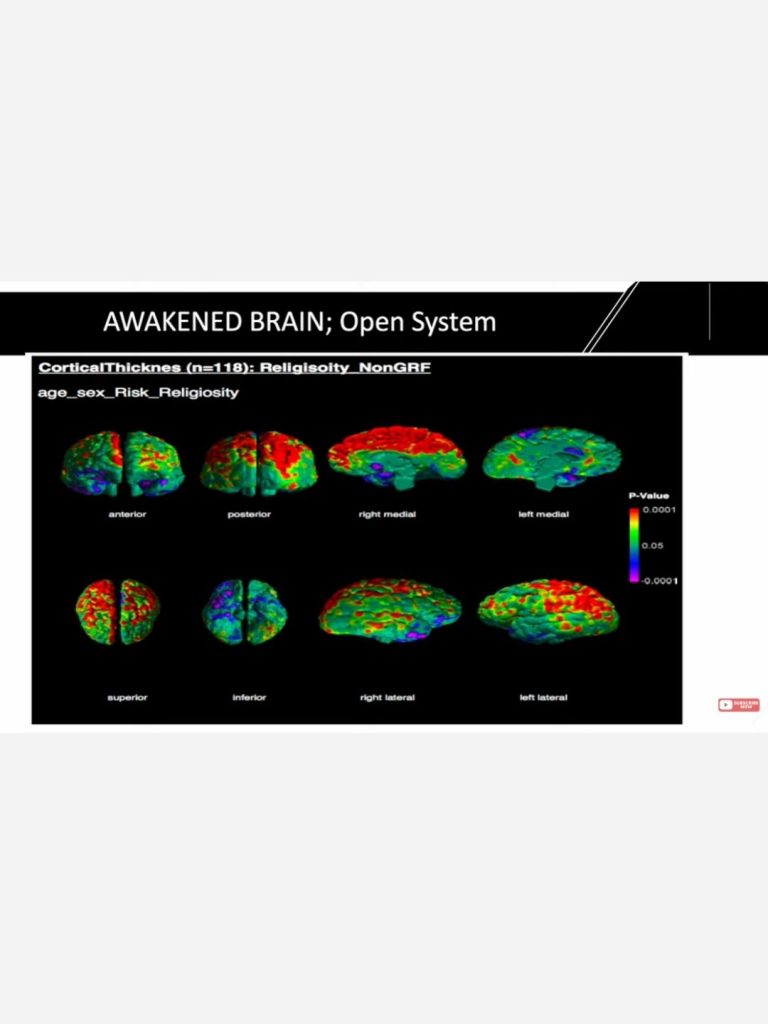
In a landmark study published in JAMA Psychiatry (2014), researchers used structural MRI scans to observe the brains of individuals who sustained a spiritual life over time.
The results were nuts!
People who reported that “their spiritual life is important” and maintained that relationship for over 8 years showed:
- A thicker cortex in the same brain regions that tend to thin in people with depression
- The effect was strongest in people with a family history of depression
- Suggesting spirituality may act as a buffer against depression
Simplifying it:
Spirituality changes the physical structure of your brain!
And even nicer, there is no single path to it. Meditation, acts of service, ethical living, contemplation… Even pursuing becoming Bruce Lee or Master Yoda contributes.
The two dimensions of spirituality
From a scientific perspective, spirituality tends to express itself in two main ways:
- Connection to the transcendent
(God, nature, a higher intelligence, or any other sense of unity). - Connection to others
(Seeing ourselves as part of a shared human experience and automatically treating others with more compassion).
When both are present, we begin to understand where we end, and the world begins.
And paradoxically, how deeply connected we all are.
When spirituality was shared
For most of human history, spirituality wasn’t a private, isolated experience.
People used to gather in public squares and open spaces to share, question, and explore different spiritual perspectives together.
These were natural places of dialogue, disagreement, curiosity, and collective meaning-making.
Spirituality was lived in relationships.
Over time, particularly in Western societies, there was a cultural and political shift toward organising spiritual life within designated institutions, such as churches, temples, and other private spaces.
This movement was an attempt to respect diversity and reduce conflict.
But intentionally or not, it also had a negative consequence:
Spirituality became increasingly compartmentalised. What was previously something explored as groups became something practised in private spaces, detached from daily public life and, for many people, slowly abandoned.
When we remove common spaces for spiritual dialogue, we risk underdeveloping what neuroscience now suggests to be a core human capacity.

A culture that weakens the spiritual core
This shift becomes even more visible in modern culture.
In another study mentioned by Lisa, psychologist Suniya Luthar and her team found that teens in affluent schools reported higher levels of depression and anxiety than many of their less privileged peers.
Why? Because of what was being valued.
Among girls, the main predictors of popularity were:
- Physical attractiveness
- Relational aggression (“mean girls”)
And among boys:
- Substance use
- Sexual conquest (not connections, only numbers)
Add the isolating effects of social media, and we get a culture that disconnects people from meaning, replaces belonging with performance, and weakens the spiritual core.
That’s a very dangerous combo!

Spirituality, suffering, and post-traumatic growth
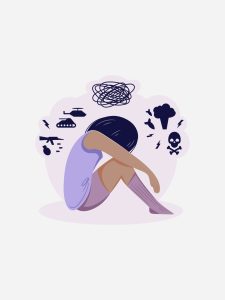
Interestingly, suffering can serve as a gateway to spiritual development.
Studies on PTSD and war veterans show a strong correlation between trauma and spiritual growth, often referred to as post-traumatic growth.
But this doesn’t happen automatically.
Researchers identified four key factors:
- Accessing the experience (not avoiding it)
- Putting it into words
- Sharing it with others
- Bringing a sense of meaning or transcendence to it
In other words, pain becomes transformation when it is integrated, shared and addressed.
Achieving awareness vs awakened awareness
There are two fundamental modes of awareness:
Achieving awareness:
- What can I get?
- What is my goal?
- What is my strategy?
Awakened awareness:
- What is life showing me right now?
- What is being asked of me?
- What is unfolding through me?
One is linear, and the other is entirely relational.
And when we learn to move between both, something remarkable happens in our brains:
We build new neural pathways. Bridges between logic, emotion, and meaning.
The frequency of a new life
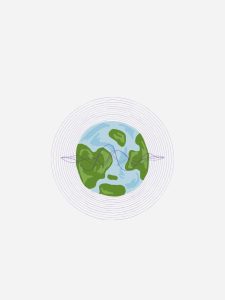
Professor Miller describes this state as a “wave”.
The same wave is associated with meditation, the wave observed in monks’ brains.
A wave called high-amplitude alpha.
Professor Miller finds something poetic here: this wave sits at almost the same frequency as the Schumann resonance, the Earth’s natural electromagnetic hum, at around 8 Hz.
Coincidence or connection? Science can’t say yet. But it’s a beautiful thought, isn’t it, my friend?
Concept of Eden as a state of awareness, not a place
Miller offers a scientific reinterpretation of what she considers Eden:
Eden is not a place per se. It is rather a level of awareness.
A way of being where life is experienced as meaningful, interconnected, and somehow sacred.

Einstein, integration, and the table of knowledge
Before you go, I want to let you know the following Einstein quote, one of my favourite ones.
“A human being is a spatially and temporally limited piece of the whole, what we call the ‘Universe.’ He experiences himself and his feelings as separate from the rest, an optical illusion of his consciousness…” — Albert Einstein, in a 1950 letter to Robert S. Marcus, a father grieving the loss of his son.
He is not talking about naive belief. Or rigid logic.
He is talking about spirituality as integration.
Where sceptics, mystics, and scientists sit at the same table and create something entirely innovative.
When times get tough, spiritual people don’t just break. They search, they question, and they expand on the answers.
And in doing so, they begin to tune into a different frequency.
One that heals.
One that connects.
One that genuinely cares. 💛
Click here to check out part 3 of this series about science and spirituality, and thanks for reading my content.