
What is it like to live in the ghetto?
What shapes and transforms the experience of
growing up in a Brazilian hood?
⚠️ Warning: This post is not recommended for kids and may contain triggers related to suicide, violence and sexual abuse. Please read it carefully.
In this post, I will share a glimpse of my experiences as a living statistic
to illustrate the complexity of this reality.
If you’ve ever wondered what it’s like to be born and grow up in the hood, I’ll save you time and try to paint the most realistic picture possible. Also, be grateful that you’ll only have to imagine it, because fortunately, it’s not part of your bubble.
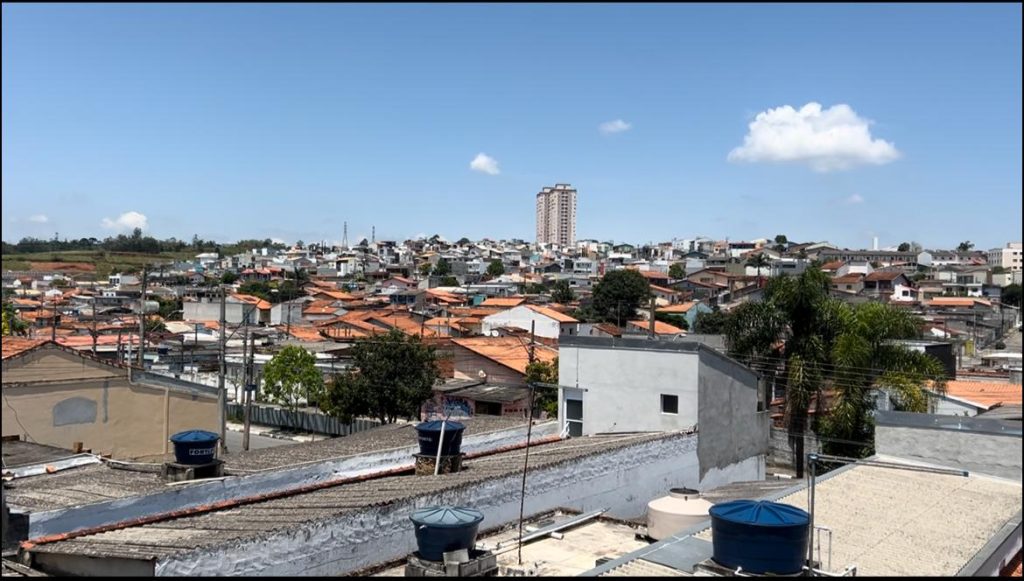
I spent most of my life ashamed to let my friends and crushes know I lived in a house with no doors, all mouldy, in César de Souza, Mogi das Cruzes, in the suburbs of São Paulo. The place where I grew up isn’t exactly a slum per se, but it’s pretty rough.
Life in the ghetto is full of surprises, some of which are not that cool, like many guns on display, pickpockets, constant violent police raids, massive holes in the roads with a tree inside (as we have no signs), neighbours burning furniture on the street and so on.
When I was around fourteen, I had my first reality shock: a girl I knew and used to play on the streets died playing Russian roulette with her brother and sister-in-law.
Another colleague I also used to play with on the street died later, at the age of sixteen. Her ex-boyfriend rolled a mattress around her body and set her on fire during his day out from prison.
(Yes, inmates in Brazil sometimes have a day out of jail for some reason!)
On the street above the one I grew up in, there was a family where the mother had died, and the older siblings had been arrested for dealing drugs.
So, in the end, it was only a thirteen or fourteen-year-old kid taking care of his younger brothers. The neighbours used to help them as best they could, since they didn’t have much either.
I had personally experienced some sh*t, and in 2023, my brother was shot by a municipal guard inside my parents’ house. One bullet slightly hit him in the face, and the other one crossed back and left through his belly, requiring him to have part of his intestine rebuilt.
Fortunately, he survived, and the guard was arrested.
It’s common for it to happen in Brazil, with fatal victims and not much punishment.
Still, my family and I have experienced some intense days, with a member between life and death.
I apologise for the heavy tone I’ve set in this article. I have to be honest about it to paint a realistic picture of what it’s like living in the hood. Maybe you’ll be able to see beyond the scenery the mainstream sells.

Why is the hood life romanticised in pop culture
when the reality is so harsh?
In the song “Poetisas no Topo 2”, MC Ebony says something that resonates with me, since I heard it: “At the time I was working upon my success, you didn’t want to be a ‘raise’. Did you?”
“Raise,” or “cria” in Portuguese, is a slang term originating in Rio de Janeiro that refers to individuals born and raised in favelas and hoods.
Suddenly, people decided it was cool and badass to claim they were from the ghetto, and some even started pretending to be from there.
Why did this happen?
Several interconnected factors contribute to this, and I have identified, based on long-term research, the most important ones to discuss. Ready?
- The influence of the media
Movies, TV shows, and social media love depicting the difficulties and triumphs of individuals in marginalised communities because it sells.
This is good in parts, as it highlights the resilience, loyalty, and authenticity of those living in the hood. On the other hand, it also attracts fake narratives from people not even born in the ghetto, transforming reality into a product and romanticising people’s suffering to commercialise it. - The rise of music genres from the hood
Rap, hip-hop, funk, pagode, and samba have significantly changed how society perceives life in the favela.
Famous “crias” share their stories on social media, creating a sense of belonging and connectivity. At the same time, this can open space for false narratives and turn violence and crime into a spectacle or an object of glamour. - Escapism and Fantasy
For some, glamourising life in the ghetto serves as an escape from their own realities.
Seeking adrenaline, rebellion, or a sense of belonging, many identify with the culture of the hood, even when it does not directly reflect their own lives.
The problem arises when this identification turns into appropriation: pretending to live what one does not actually experience, without respect for the history and reality of those who were truly born and raised in poverty. - Cultural Appropriation
With the popularity of the lifestyle of favelas and ghettos, some aspects of the culture have been appropriated and turned into trends, creating a distorted or romanticised version of an already complex and suffering reality.
In the process, the protagonism of those who actually live and build this history is erased, reducing real experiences to a product or aesthetic. - Socioeconomic Factors and Counterculture Appeal
Economic disparities and structural failures in society are becoming increasingly visible.
The romanticisation of life in the ‘quebrada‘ (hood) ultimately reflects people’s dissatisfaction with social rules and conventions, celebrating ways of living that go beyond the norm, even though, for those who actually live it, these choices are often not an option but a necessity.
We must be wise when telling such stories and choosing the message we want to transmit from our traumas, conquests and past experiences.
As MC Marechal says in ‘Favela Vive 5‘:
“Ignorance is embracing the lies of our oppressors. They only speak about brands, marking a youth that cannot distinguish between price and value.”

Leading in reshaping poverty and hood’s history in a way that educates and inspires society to care about and act on inequality is far more critical than a stranger’s likes on Instagram.
I hope you dare to tell your story with firmness and wisdom, because only genuine narratives have the power to move people, and these voices are more necessary than ever!

Four social skills and lessons I’ve learned by living in the hood, and you can also benefit from them:
I began my text by highlighting the harsh aspects of the ghetto. I don’t recommend visiting ‘favelas’ and hoods just for tourism, because the people who live there aren’t on display.
They are real people, with real stories and struggles.
If you truly immerse yourself in the local culture and absorb the wisdom of the neighbourhood, you will come away with lessons for a lifetime.
These are some of the ones I will carry forever from my days in César de Souza:

💡 Life in the hood will make you cry, but it also
transforms you into a superhuman!
Seriously, you’ll find a strength inside that you never thought existed! I was shocked the first time I saw somebody pointing a gun at another person.
It felt like the world just froze for a few seconds.
Still, after a couple of guns pointed directly at me, I became the type of woman who firmly stands up for my values and travelled alone to live with an Indigenous community, at the heart of Pantanal’s jungle, easy peasy!
Life forces you to mature before your time to survive and protect yourself. Whether from crime, police violence, or systemic prejudice that many pour onto the underprivileged, instead of actually taking action.

💡 If you don’t do it, nobody will.
I am not referring to a meritocracy here. But if you don’t do you and run after your goals, expect a total of zero people to do it on your behalf, bro.
The meritocracy speech is a hoax, but the ideology that you’re poor and have to stay in your ‘poor lane’ forever is also pure BS.
Aware that we’re born with the password for the end of society’s queue, we must be three times better to conquer our place in standard institutions.
If trying hard is not a guarantee of success, imagine not trying at all!
Be the one who will break the chains of poverty and ignorance in your bloodline. You will find people to help you along your path, but nobody will do anything in your place.
Many people will try to discredit you, doubt your capabilities, and attempt to show that you don’t belong (including some of your family).
But remember how much you endured from where you came and how much of a gorilla with blue ballsacks you are, and do not let others make you doubt your worth and where you’re heading.

💡Fairness is only a term in the dictionary.
Life is unfair, darling; accept reality as it is, and you’ll hurt less!
I am not trying to play the victim card here.
Still, it is important to tell you I’ve been intimate with difficulty, being another survivor of child abuse (the isolated case number two million and forty-seven).
Mate, life has to go on!
And if I weren’t a ‘raise’ from the hood, I might not be here telling you about my past.
I came very close to crossing over the veil, but I decided it was enough to feel sorry for myself; it was time for a good change.
After my brother was shot in December 2023, I spent months crying like there was no tomorrow.
Again, I imagined why it happened, why life is so unfair, and why it is so damn heavy and humiliating to come from poverty.
I was posting #JusticeforPedro to try to make his case go viral and, consequently, pressure the authorities to act.
The algorithms have worked their magic, and Facebook began to send me unexpected suggestions.
Rodrigo Alexandre da Silva Serrano, a 26-year-old waiter and father of two, was killed by military police in Rio while waiting for his wife and children, because officers mistook his umbrella for a rifle and his baby carrier for a bulletproof vest.
A racist, drunk dude stabbed another black man on his way back home in Bahia, and he did not resist.
These stories left me both desperate and grateful. Despite such atrocities, call it divine intervention or luck, but my brother is alive!
The son of a preacher ran almost ten kilometres after a little more than two months of suffering a murder attempt!
And me? I decided that, despite my dark past, I deserve a new beginning. And what makes my heart sing is travelling. So far, I have visited 15 countries and lived in 4 of them, gaining experiences that have completely changed the way I see the world.
Happiness is not a permanent state, my friend, nor is sadness.
Both are waves that come and go, shaping who we are.
Hold on just a little longer and channel your energies into understanding and overcoming the toxic patterns that have been present in your life all along.
You can learn a great deal from your darkest side and make the best of it, becoming more empathetic and brave, and starting a new, adventurous life aligned with your dreams.
💡 The ghetto teaches you to stand up for
yourself and your beliefs
Bullying, robbery and abuse exist in any environment; the hood is no exception.
And trauma can quickly occur, leaving permanent scars, silent marks of a world that rarely protects the vulnerable ones.
Life in the hood is tough, but it teaches you how to defend your values and beliefs. Once you establish healthy boundaries rooted in self-love, you will gain much freedom.
The journey of healing and personal development is continuous and marked by ups and downs.
Still, it also makes you happier and more confident that you can create a new and better life despite your dark past and traumas, transforming pain into valuable lessons.
Keep walking, Johnny Walker. The cost of not doing so is too high.

Some takeaways from this post:
- Hood Glamorisation: The concept of hood or ghetto life became popular and romanticised, encompassing both positive and negative aspects.
To be a change catalyst, we must be careful when telling our stories.
When the conversation is about the hood, we must consider the collective. Poverty attracts cameras, but it doesn’t benefit the community. - Reinvent yourself: Despite your scars and traumas, the universe continues to expand and metamorphose every day. You are part of the immensity and can reinvent your reality with love, healthy boundaries, and resilience.
- Visiting a hood: If you wish to visit a favela or any ghetto, please do so with an invitation to learn from the people’s experiences and bring lessons about equality and social justice back home.
Poverty is not an isolated phenomenon that needs heroes chasing clicks. People who live in the slums are not zoo animals.
Have empathy and respect: believing that the world revolves around your own belly button is an illusion, and sooner or later, you will run into someone who will make you burst that bubble.
And when it comes from others, it hurts ten times more!